
 Your location:Home → instrumentation and meters → Electrical instruments → ohmmeter → ZGY-1A Transformer DC Resistance Tester
 |
Product name: | ZGY-1A Transformer DC Resistance Tester | |||||
| specification: |   Zoom in on the image Zoom in on the image |
||||||
| Category: | instrumentation and meters -- ohmmeter | ||||||
| |
Price: | factory price | |||||
| Brand: | Shanghai | ||||||
| Place of Origin: | China | ||||||
| |
Available Quantity: | batch | |||||
| delivery cycle: | Spot goods (or inquire by telephone) | ||||||
 |
|
||||||
The ZGY-1A transformer DC resistance tester adopts advanced large-scale integrated circuits to improve the sensitivity of measurement; The digital display is intuitive and clear; High degree of instrument automation; Equipped with automatic digital zeroing; It has automatic protection function against various misoperations; Features such as fast testing speed. Very suitable for measuring the DC resistance of inductive samples such as transformer windings, transformers, and motor windings in the power industry sector; It can also be used as a measuring tool for switch contact resistance and general resistance.
Technical Indicators:
1. Measurement range: 1 μ Ω~ 20K Ω
2. Measurement accuracy: 1 μ Ω~ 20K Ω 0.2%
3. Resolution: 1 μ Ω
4. Working power supply: AC220V+10% or DC12V
5. Operating environment: Temperature: -10 ℃ to 40 ℃
Humidity: ≤ 85%
6. Volume: 400 × 330 × 220 mm 3
7. Weight: 4kg
Usage of ZGY-1A Transformer DC Resistance Tester
1. Connect the test line to the tested transformer
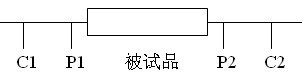
Connect the C1, C2, P1, and P2 terminals of the instrument to the test sample using the wiring method shown in the following diagram. The measurement method is the "four wire measurement method", which can eliminate the contact resistance between C1, C2, P1, and P2, and can also eliminate the influence of the resistance of the connecting wire on the test results
2. Connect the grounding terminal of the instrument to the test sample
In cases where the environmental electromagnetic field interference is severe or the test sample is an inductive test sample, the ground terminal of the instrument should be connected to the ground wire of the test sample with a wire to eliminate external interference and make the measured data more stable. If the reading of the instrument is not stable enough, it is necessary to short-circuit the non measured end of the transformer after the reading result is obtained. Short circuit the high voltage side when measuring the low voltage side, and short circuit the low voltage side when measuring the high voltage side.
3. Connect the power cord and turn on the power switch
At this point, the instrument should be placed in the "charging" state, and the resistance value display box should show "0000".
4. Choose the appropriate range
Estimate the resistance of the test sample based on its size and select the appropriate measurement range. If the resistance size cannot be estimated, the range can be selected from large to small.
5. Zero adjustment
When the instrument is in the "20m Ω" and "200m Ω" positions, adjust the "zero adjustment" knob while charging, so that the resistance display box shows "0000" and all other ranges can automatically reset to zero.
6. Measurement
Place the "charging measurement" switch in the "measurement" state, and the instrument enters the automatic measurement stage. After the resistance value display box shows a stable value, the reading can be made with the corresponding range unit.
7. Discharge
After the measurement is completed, place the "charging measurement" switch in the "charging" state, turn off the power switch, and the "discharge indicator" light will turn on. After the "discharge indicator" light goes out, remove the connection of the transformer. Otherwise, it will generate reverse induced electromotive force, endangering personal safety.
Precautions
1. During the experiment, unrelated items are not allowed to be stacked on or around the equipment panel.
2. Please check the power supply voltage before use: AC 220V ± 10% 50Hz.
After using the DC power supply for testing, the instrument should promptly charge and maintain the batteries inside the machine.
During the DC testing process, if undervoltage is found, the DC power supply should be stopped and replaced with an AC power supply for testing.
When the instrument is not used for a long time, the battery inside the instrument should be charged and maintained regularly (two months), usually for about 14 hours
6. This instrument should be protected from moisture, falling, and direct sunlight.
When replacing the fuse and accessories, please use the same model as this instrument.
8. This instrument should be moisture-proof and oil proof.
ZGY-1A Transformer DC Resistance Tester

 Related Products:
 YD9922A High speed insulation resistance test.. YD2513 DC low resistance tester YD3562 Potential Balance Tester YD2516 Handheld potential equalization tester.. ZC2667 Grounding Resistance Tester ZC7305C Grounding Resistance Tester ZC2511 type DC low resistance tester ZC2512 type DC low resistance tester ZC2512A type DC low resistance tester ZC2512B DC low resistance tester Related articles:
 Electrical instruments
  Q meter bridge ammeter voltmeter Voltammeter frequency meter power meter electricity meter multimeter clamp meter ohmmeter
  phase sequence meter electroscope oscilloscope Distortion meter Load devices Panel instrument power meter L and C meter Internal Resistance Tester Withstand Voltage Tester signal generator signal isolator SENECA Transducers Voltage loss timer T_characteristic instrument Digital Display Instrument Temperature Instrument Humidity meter Pressure gauge flow meter analytical instrument Level instrument tachometer Recording instrument weighing instrument Specialized instruments
 Home|Quality Commitment|Ordering|Payment method|product delivery|support|Disclaimer|Contact Us
Copyright®2011 www.91way.com Copyright.
Phone:+86-21-66770508 +86-13916500500 Fax:+86-21-66108310
Email:91way@163.com Wechat:40606422
沪ICP备2021005791号  沪公网安备31010702003255号

