
 Your location:Home → Pump valve fittings → valve products → butterfly valve → D341J desulfurization butterfly valve
 |
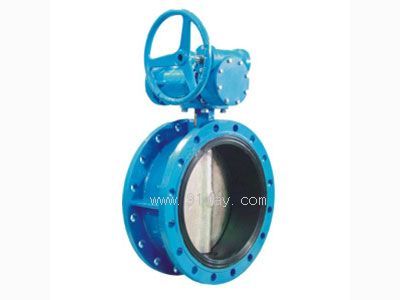
Product name: | D341J desulfurization butterfly valve | |||||
| specification: |   Zoom in on the image Zoom in on the image |
||||||
| Category: | Pump valve fittings -- butterfly valve | ||||||
| |
Price: | factory price | |||||
| Brand: | Shanghai | ||||||
| Place of Origin: | China | ||||||
| |
Available Quantity: | batch | |||||
| delivery cycle: | Spot goods (or inquire by telephone) | ||||||
 |
|
||||||
D341J desulfurization butterfly valve is suitable for pipelines transporting various corrosive and non corrosive fluid media in engineering systems such as furnaces, coal gas, natural gas, liquefied petroleum gas, city gas, cold and hot air, chemical smelting, and power generation environmental protection. It is used to regulate and cut off the flow of media
Functional purpose
Butterfly valve refers to a type of valve in which the closing element (valve disc or butterfly plate) is a disc that rotates around the valve shaft to achieve opening and closing. It is mainly used for cutting off and throttling in pipelines. The butterfly valve opening and closing component is a disc-shaped butterfly plate that rotates around its own axis inside the valve body to achieve the purpose of opening, closing, or adjusting. The fully open and fully closed butterfly valve is usually less than 90 °, and the butterfly valve and stem themselves do not have self-locking ability. In order to position the butterfly plate, a worm gear reducer should be installed on the stem. By using a worm gear reducer, not only can the butterfly plate have self-locking ability to stop at any position, but it can also improve the operational performance of the valve.
The characteristics of industrial butterfly valves are high temperature resistance, high pressure range, large nominal diameter, carbon steel valve body, and metal ring instead of rubber ring for valve plate sealing. Large high-temperature butterfly valves are manufactured by welding steel plates and are mainly used for flue gas ducts and gas pipelines for high-temperature media.
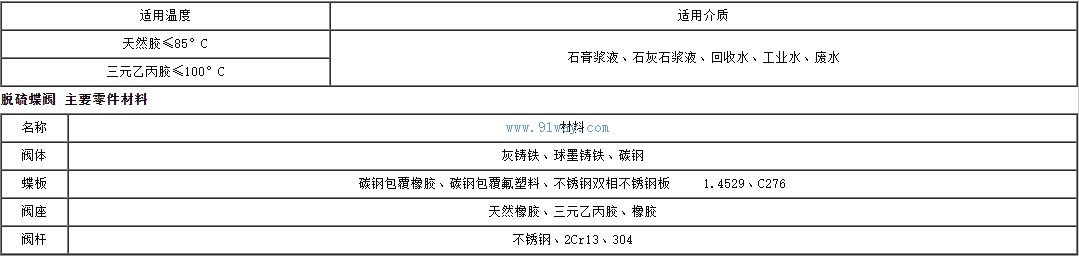
Main performance specifications for desulfurization butterfly valve D341J
 Related Products:
 SD342X Vortex telescopic butterfly valve XD81 Handle groove signal butterfly valve D81x Handle groove butterfly valve XD381X Turbine Groove Signal Butterfly Valve .. SD71X-16 Locking butterfly valve D673F-16C/25C Three eccentric PTFE sealed pne.. XD371X-16 Fire specific butterfly valve D71X-16QB5 Manual Unscented Butterfly Valve D341W-0.5 Ventilation butterfly valve D971F-10/16 Full PTFE Clamp Butterfly Valve Related articles:
 Pump products valve products
  foot valve butterfly valve
  gate valve ball valve angle valve sight glass solenoid valve adjusting valve control valve globe valve plunger valve Plug valve balance valve diaphragm valve steam trap exhaust valve Slurry valve safety valve pulse valve pressure relief valve check valve vacuum valve electric valve marine valve Warning valve servo valve expansion valve pneumatic valve Gas valve Fluorine lined valve Rubber lined valve blind plate valve Sanitary valve Stacking valve Directional control valve check valve Pipe force valve throttle valve overflow valve proportional valve explosion-proof valve filter Drain valve Breathing valve|flame arrester Instrument/Needle valve actuator pipe fittings sealing element fan
 Home|Quality Commitment|Ordering|Payment method|product delivery|support|Disclaimer|Contact Us
Copyright®2011 www.91way.com Copyright.
Phone:+86-21-66770508 +86-13916500500 Fax:+86-21-66108310
Email:91way@163.com Wechat:40606422
沪ICP备2021005791号  沪公网安备31010702003255号

