Product Use
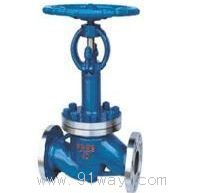
DJ41W (Y) low-temperature shut-off valve is suitable for the management system of low-temperature liquid storage and transportation equipment, with the characteristics of flexible switching and reliable sealing. It can also be used for the management system of other low-temperature and cryogenic media
Execution Standard
Design and Manufacturing: JB/T7749-95
Structural length: GB/T12221-89
Connection end: GB/T9113-2000, HG20592-97, SH3406-96 GB/T12224-89
Inspection and Testing: JB/T7749-95
Performance parameters of DJ41W (Y) low-temperature globe valve
|
Model |
DJ41Y-16 |
DJ41Y-16P |
DJ41Y-25 |
DJ41Y-25P |
DJ41Y-40 |
DJ41Y-40P |
|
Work pressure (MPa) |
one point six |
two point five |
four |
|
Applicable temperature (℃) |
-45 |
-101 |
-196 |
|
Applicable Medium |
Low temperature media such as liquefied natural gas, ethylene, propylene, etc |
|
Material |
Valve body and valve cover |
LCB |
LC3 |
LCB |
LC3 |
LCB |
LC3 |
|
Valve disc, valve seat |
Chromium nickel steel+cobalt chromium tungsten |
|
valve stem |
Chromium nickel steel |
1、 Design requirements for low-temperature valves
According to the usage conditions, the design of low-temperature valves has the following requirements:
1) Valves should have the ability to work for a long time in low-temperature media and ambient temperatures.
2) Valves should not be a significant heat source for low-temperature systems. This is because the inflow of heat not only reduces thermal efficiency, but also causes the internal fluid to flow rapidly if there is too much inflow
Evaporation generates abnormal pressure rise, causing danger.
3) Low temperature media should not have harmful effects on handwheel operation and packing sealing performance.
4) Valve assemblies that come into direct contact with low-temperature media should have explosion-proof and fire-resistant structures.
5) Valve assemblies working at low temperatures cannot be lubricated, so structural measures need to be taken to prevent friction from scratching.
2、 Material selection for low-temperature valves
1. Low temperature valve body material
(1) Factors to be considered in the selection of main materials
From the perspective of metallography, except for austenitic steel, copper, aluminum, etc. with face centered cubic lattice in metallic materials, general steels will exhibit low-temperature brittleness at low temperatures
Sex reduces the strength and service life of valves. When selecting the main material, the first step is to choose a material suitable for working at low temperatures. Aluminum does not exhibit low-temperature brittleness at low temperatures,
However, due to the low hardness of aluminum and aluminum alloys, the wear resistance and scratch resistance of aluminum sealing surfaces are poor, so their use in low-temperature valves is limited to a certain extent, only in low pressure and small diameter applications
Valve selection.
Materials working at low temperatures should ensure their low-temperature performance, mainly by ensuring their cold impact strength. The valve internals must be selected correctly to have sufficient cold shock strength
Degree is necessary to prevent breakage. Alloy steels of C and Cr quickly lose their impact strength below -20 ℃, so their usage temperatures are limited to -30 ℃ and -50 ℃, respectively. Containing Ni
Nickel steel with a content of 3.5% can be used up to -100 ℃, while nickel steel with a Ni content of 9% can be used up to -192 ℃. Austenitic stainless steel, nickel, Monel alloy, Hastelloy alloy, titanium
Aluminum alloy and bronze can be used at lower temperatures (-273 ℃).
In addition, the selection of materials for low-temperature valves should also consider the following factors:
1) The minimum operating temperature of the valve;
2) The mechanical properties required for metal materials to maintain working conditions at low temperatures, especially impact toughness, relative elongation, and structural stability;
3) Has good wear resistance under low temperature and oil-free lubrication conditions;
4) Has good corrosion resistance;
5) When using welding connections, the welding performance of the material also needs to be considered.
(2) Selection of materials for valve body, valve cover, valve seat, and valve disc (gate)
The general principle for selecting materials for these main components is to use ferritic steel when the temperature is above -100 ℃; Choose austenitic steel when the temperature is below -100 ℃; Low voltage and
Small caliber valves can be made of materials such as copper and aluminum. Choose appropriate materials based on the minimum operating temperature during design. (3) Material selection for valve stem and fasteners
When the temperature is above -100 ℃, the valve stem and bolt materials are made of alloy steels such as Ni, Cr Mo, etc., and undergo appropriate heat treatment to improve tensile strength and prevent thread bite.
When the temperature is below -100 ℃, austenitic stainless acid resistant steel is used for manufacturing. But 18-8 acid resistant steel has low hardness, which can cause mutual abrasion between the valve stem and the packing, resulting in leakage at the packing.
Therefore, the surface of the valve stem must be plated with hard chromium (coating thickness 0.04-0.06mm), or treated with nitriding and nickel phosphorus plating to improve surface hardness. To prevent nut and bolt from biting
Death, nuts are generally made of Mo steel or Ni steel, and molybdenum disulfide is coated on the surface of the thread.
2. Selection of gasket and packing materials for low-temperature valves
As the temperature decreases, the shrinkage of fluoroplastics is significant, which can lead to a decrease in sealing performance and easily cause leakage. Asbestos fillers cannot avoid permeability leakage. Rubber on liquefaction days
Natural gas has foaming properties and cannot be used at low temperatures.
In the design of low-temperature valves, on the one hand, structural design is used to ensure that the packing operates at a temperature close to the ambient temperature. For example, a long neck valve cover structure is used to keep the packing box away from the environment
Try to keep the low-temperature medium as far away as possible, and on the other hand, consider the low-temperature characteristics of the filler when selecting it. Low temperature valves generally use asbestos packing impregnated with polytetrafluoroethylene.
Flexible graphite is a recently developed excellent sealing material. This material is impermeable to gases and liquids, and has an elasticity of 10% -15% in the thickness direction,
A lower fastening pressure can achieve sealing. It also has self-lubricating properties and can be used as valve packing to prevent wear between the packing and the valve stem. The temperature range for the use of flexible graphite fillers is
-200~870 ℃.

 Your location:Home → Pump valve fittings → valve products → globe valve → DJ41W(Y) Low temperature shut-off valve

 Zoom in on the image
 Related Products:
 J66H type globe valve
 Pump products
  foot valve
 沪公网安备31010702003255号
