|
Product name: |
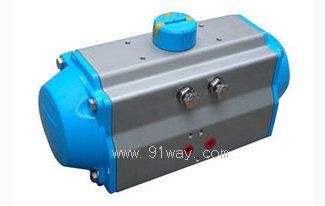
AT Pneumatic actuator
|
|
specification: |
|

 Zoom in on the image Zoom in on the image |
|
Category: |
Pump valve fittings
-- Pneumatic actuator |
|
Price: |
factory price |
|
Brand: |
Shanghai |
|
Place of Origin: |
China |
|
Available Quantity: |
batch |
|
delivery cycle: |
Spot goods (or inquire by telephone) |
|
| |
Shanghai Beiyuan Industry and Trade Co.,Ltd
+86-21-66770508
+86-13916950330 |
 91way@163.com 91way@163.com
 13916950330(Wechat) 13916950330(Wechat)
|
|
|
|
AT Pneumatic actuatorDetailed product description:

The AT series pneumatic actuator is designed with a dual piston rack and gear rotating structure, which is divided into double acting and single acting (spring reset), suitable for various non corrosive environments outdoors or indoors. Dry or lubricated clean compressed air or non corrosive gas filtered through 30 μ m. Temperature -20 ° C (-4 ° F)
Air source pressure of AT pneumatic actuator
The gas source pressure is 10 bar (145 psi)
The commonly supplied gas source pressure is Yale 2.5 bar (36 psi)~8 bar (116 psi)
AT pneumatic actuator operating temperature
SL is the standard temperature (sealing material is nitrile rubber O-ring NBR) -20 ℃ (-4 ° F)~+80 ℃ (+176 ° F)
HL is high temperature (sealing material is fluororubber O-ring FPM) -15 ℃ (+5 ° F)~+150 ℃ (+300 ° F)
LT is low temperature (sealed with silicone rubber O-ring SILICON) -40 ℃ (-40 ° F)~+80 ℃ (+176 ° F)
For operations using low and high temperatures, special lubricating grease is required for lubrication
General problems and solutions guide for AT pneumatic actuators and pneumatic valves
Solution to inspection items for AT pneumatic actuator faults
Pneumatic valve cannot operate
1. Whether the solenoid valve is normal, whether the coil is burned out, and whether the solenoid valve core is stuck by dirt. Replace the solenoid valve, replace the coil, and clear the dirt
2. Conduct a single air supply inspection of the actuator to ensure normal operation, such as cylinder piston blowby, cylinder body and end cover or shaft leakage, etc. Disassemble the actuator to check if the seals are damaged and if the surface of the cylinder bore is damaged. Replace the damaged sealing ring, replace the cylinder or piston
3. Lock the ball core inside the valve to remove impurities and replace damaged valve components
4. Manually operate the actuator with the handle in the manual position and move the handle to the pneumatic automatic position
5. Correction or replacement of twisted or flattened pipelines
6. The medium or ambient temperature is too low, causing the pipeline to freeze. Even if the condensate is clear, add a water removal device
The pneumatic valve moves slowly and crawls
1. If the gas source pressure is not sufficient to increase the gas source pressure, a gas storage tank should be installed along the way to reduce pressure fluctuations.
2. If the flow rate is insufficient or there are other devices with high gas consumption working at the same time, add gas storage tanks and air compressors to reduce pressure fluctuations
3. Insufficient torque of pneumatic actuator increases AT pneumatic actuator specifications
4. The valve load is too large, and the valve core or other valve components are assembled too tightly, which is unreasonable. Repaired and adjusted valve torque
5. Proper lubrication is necessary for large fluctuations in cylinder friction
Other faults of AT pneumatic actuator
1. The valve action starts to jump, and the load increases due to the increase in AT pneumatic actuator specifications
2. When the valve action ends, it jumps too quickly and has excessive inertia energy. Add a speed regulating valve or external buffer
Return signal without signal power line, short circuit, open circuit
1. Repair the power supply circuit
2. Readjust the cam to the correct position
3. Replace the micro switch
 Related Products:
- Related articles:


 IS Electric actuator
  沪公网安备31010702003255号
 Your location:


